

Interview with Sunaina Buckshey, Artist, Curator, & Founder of “The Artist’s Cove” Clubhouse
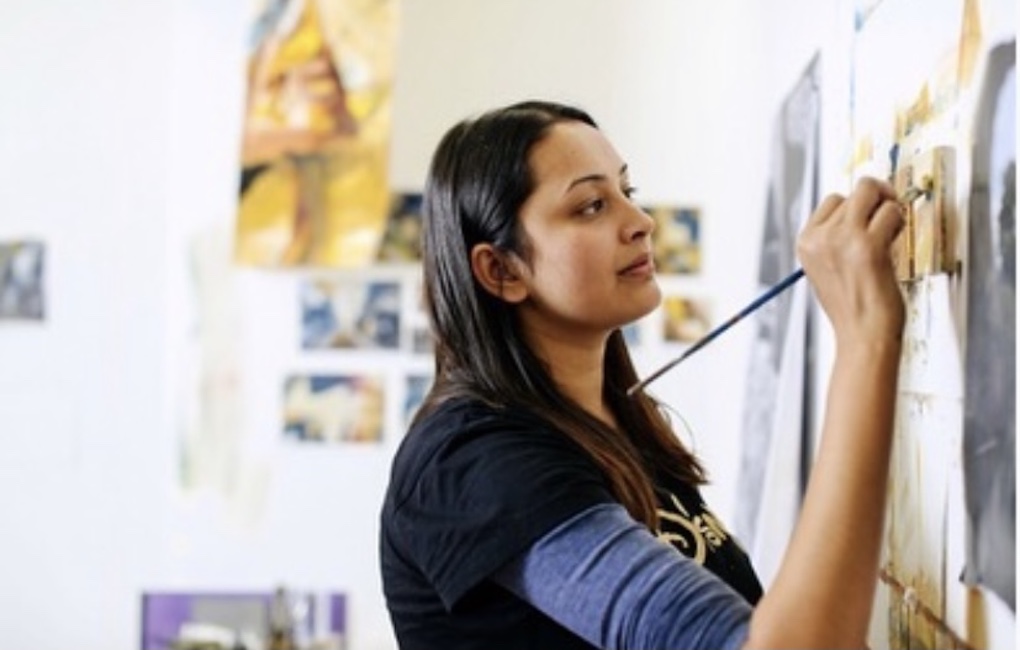
One of the leading voices in art on Clubhouse, Sunaina Buckshey is an artist, curator, and writer based in Toronto. Each week, she brings together creatives from around the world for chats on everything art-related on the newest platform to gain attention online. While participants on her Clubhouse “The Artist’s Cove” discuss everything from gallery representation to NFT’s, we were excited to hear from this inspiring art leader about her work specifically.
Can you briefly tell us about your interest in color?
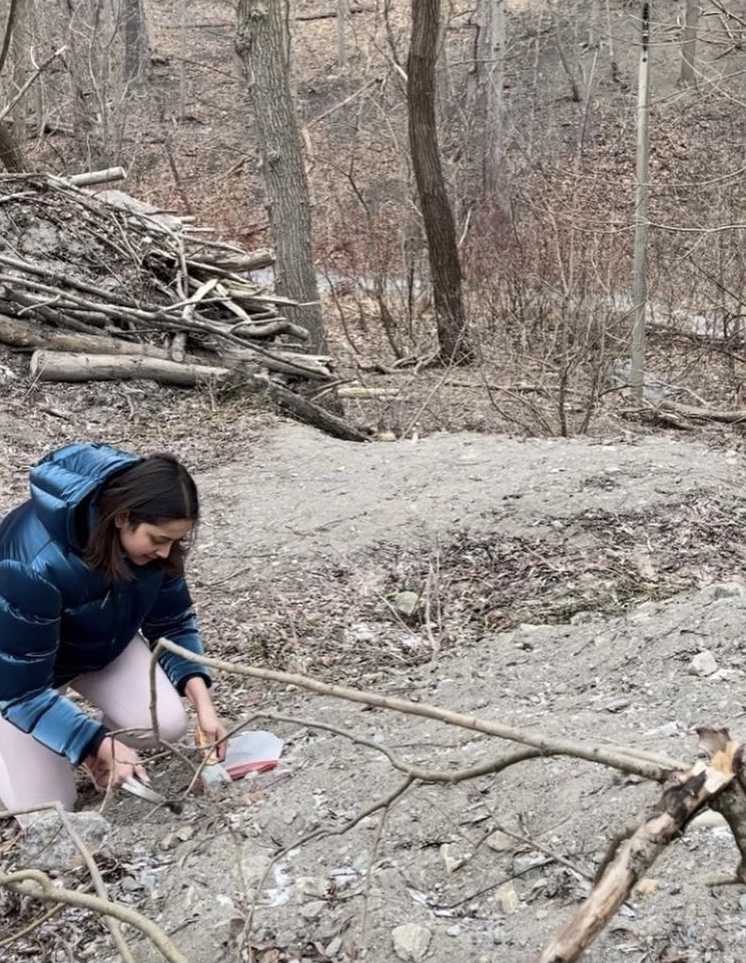
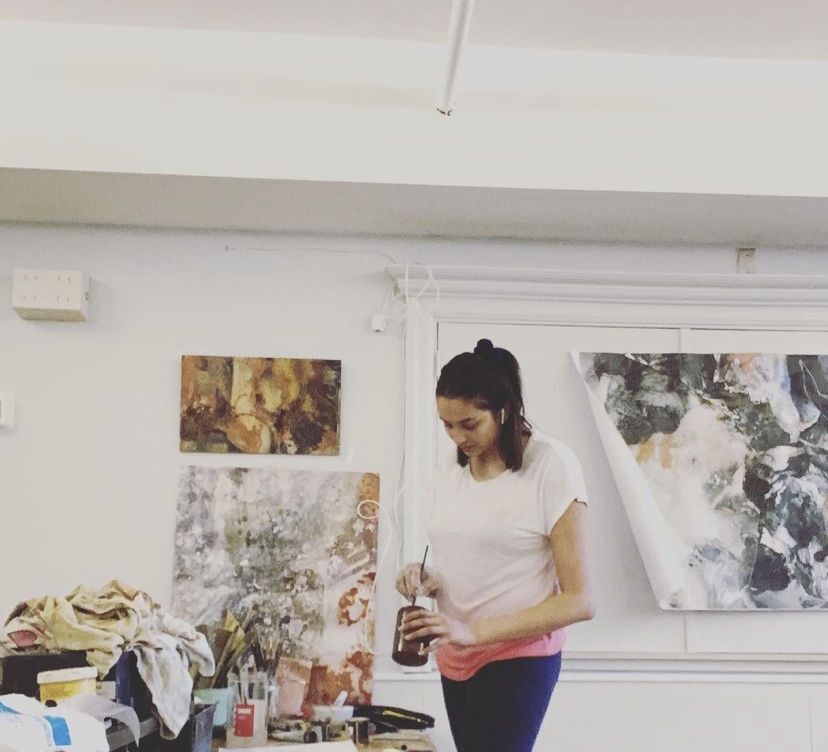
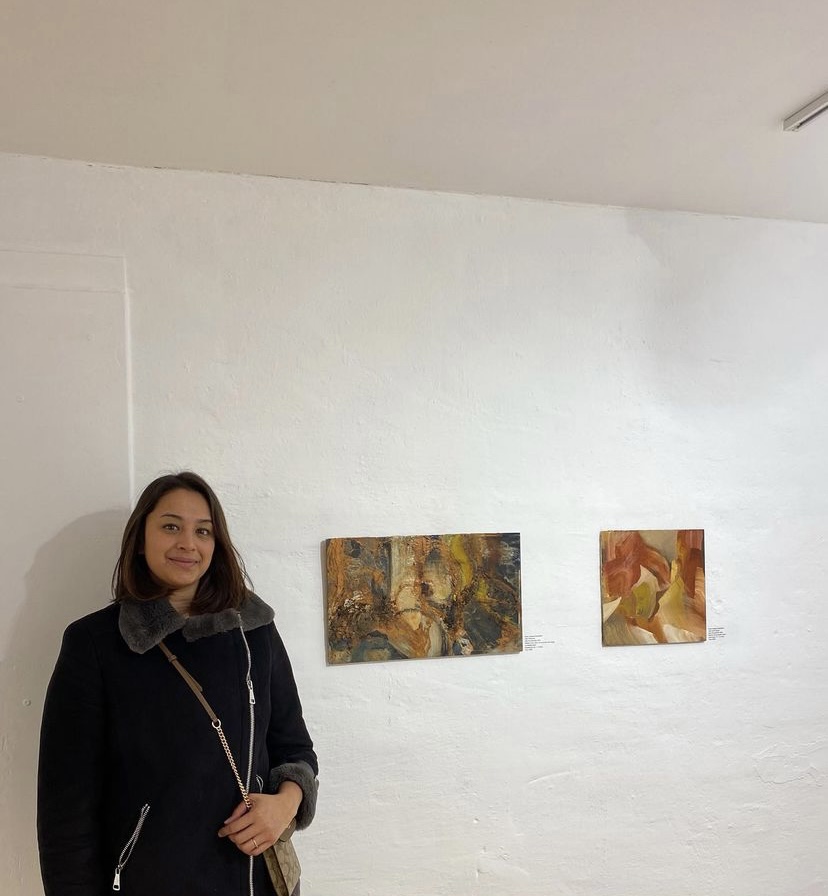
My practice explores ‘colour’ as a subject matter in order to bridge a connection between her western influence and Indian heritage. ‘Colour’ is commonly perceived merely as a picture-making tool whilst the significance of its pre-existing ideologies are overlooked. As a result, my work is concerned with how the pigments we painters use today are contemporary re-enactments of their historic selves by manifesting an essence of a cultural past that is embedded within their materiality. Based on this, I often create my own pigments from clay, rocks, and charcoal in order to retrace fragments of a material history from a contemporary position.
What inspires you on a day to day basis?
- Long walks in nature
- Sketching outdoors
- Visits to museums/ galleries
- Creative debates/ discussions centered around the contemporary art world
- Blogging
My practice is heavily driven by Art History, hence, I thoroughly enjoy reading and writing about various historic collections and exhibitions found in museums and galleries.
What inspired you to create your own pigments for your work and why do you like working with your own medium?
There is something fascinating about going back in time through the physicality of the earth’s materials. I have always been drawn to the imperfections of various objects (e.g. the cracks in clay and the eroded surfaces of rocks) as I feel that anything old and destructed encapsulates the richest form of cultural history that is unhinged by modernization. By extracting my own colours from the earth, not only do I feel deeply connected to my ancestral roots, but I am able to paint with pigments in their purest and earliest form. Of course, no colour is ‘pure’ in a literal sense, however, it can be deemed pure enough for its current time. The foundation of my practical and contextual research stems from the prehistoric era, hence, I enjoy working with my own medium as this allows me to situate myself back in history and re-enact the earliest ways of ‘making art’.
You do curatorial work as well. Are you working on any projects at the moment?
I am currently working on three curatorial projects simultaneously:
- I am collaborating with an Art Historian and Advisor to organize monthly artist interviews and am responsible for researching and writing about the various artists hailing from both local and international backgrounds.
- I am also involved as a curator for an upcoming art event affiliated with my studio collective ‘Flick The Switch’.
- I am currently co-curating an online show with a fellow curator based in India. The focus of the show is to recognize, support, and foster networks between both emerging and established artists from around the globe.
What is the art community like in Toronto, where you are based?
The art community in Toronto is thriving and as someone who just migrated here, it has been an insightful experience so far. Many art organizations, especially the non-profit ones are driven solely by community spirit which makes the art scene in Toronto quite welcoming and approachable in comparison to the other cities. Accessibility is another important factor that persists within the art sector here in Toronto as this can really aid the development of one’s network, especially if they are unfamiliar with the particular art scene. It has been a positive experience so far!
Why start “The Artist’s Cove” on Clubhouse?
The goal was to create a space where artists, curators, gallerists, etc. can come together and conduct informative and educational conversations/ debates about the art world. There are not many art rooms on Clubhouse, therefore, ‘The Artis’s Cove’ aims to foster networks between creatives from around the globe and offers a safe space for people to express various viewpoints and opinions.
What is the art community like on Clubhouse?
Clubhouse is like any other social media app where you can grow your creative network. However, the creative community on Clubhouse is very accessible due to the nature of the app. Briefly, the app is based on a voice conference where people from around the world can start topics/ rooms that spark informative discussions and debates centered around the art world. There are indeed not a lot of art clubs on Clubhouse just yet since this is a newly developed app. However, the clubs that I have become associated with have really aided my professional development as an artist and curator. Clubhouse has a supportive and encouraging community of creatives hailing from different levels and backgrounds where we all are able to learn from each other and share our creative skills and experiences.
Do you think more artists can benefit from being on Clubhouse? How do you suggest they get involved?
Absolutely. I would definitely recommend that both emerging and established artists get involved as the app will really provide a strong platform for expanding themselves as creatives. I myself have been a member of some art clubs that have proven to be highly beneficial. I would recommend that if artists are interested in joining Clubhouse, they should get involved with the following clubs.
- Global Art Exhibition
- The Art Club (Highly recommend)
Of course, my club ‘The Artist’s Cove’ is an option as well if any creative wants a safe space to start growing their network. I am happy to connect with fellow artists and help expand their community!
Which artists (emerging or well known) are currently inspiring you?
I have always admired the works of J.M.W Turner, Yves Klein, and Mark Rothko. Klein and Rothko both addressed the notion of colour as the sole subject within their artistic practice. Rothko’s colour-field paintings reflected on the use of colour from a psychological perspective. Klein created his own version of a rich blue colour, ‘Ultramarine’ in order to challenge the ‘traditional’ notions of painting by addressing the concept of spirituality through the depth of flat colour on a canvas.
Do you see any trends emerging in the art world at the moment?
I most certainly do. Given the overall social and political issues that have been occurring on a global scale for a while now, museums, galleries and various art organizations around the world have started to quote on quote ‘mend their ways’ in what kind of art they research and display. Some places more than others are now gradually starting to address prevailing issues around equality and diversity within the art world. For example, since the BLM movement, various art organizations within the art industry have started to support the works of black artists. Some opportunities out there are now also specifically geared towards supporting such underrepresented communities.
What is your favorite museum or gallery to visit?
Back when I was in London (UK), I really enjoyed visiting the Natural History Museum and the Horniman Museum, especially the center for their archival collection. In Toronto, I like the Thompson Landry Gallery and the AGO, where the ongoing Andy Warhol exhibition is my ultimate favorite!
What books or movies on art do you recommend?
Some movies I recommend:
- Velvet Buzzsaw
- Midnight in Paris
- Loving Vincent
Books:
- Chromophobia by David Batchelor
- Chromaphilia by Stella Paul
- What Painting Is by James Elkins
Why is art important to society?
We live in a world where everything we experience is a form of art. From the adverts on TV to the music on your headphones or even the websites we browse, art is everywhere. Art is important to society because it allows us to educate ourselves about the modern-day from a different perspective. It provides us with a foundation to express ourselves in a language that words can’t do justice to. The best thing about art is that you don’t need to be an artist to understand it. It is a language that is accessible and relatable to each individual in society regardless of the conceptual aspects.
Art is a crucial part of society’s evolvement as it brings together a diverse range of voices that speak of their time and culture. In contemporary society, we are fascinated by those who have come before in art history, from Vincent Van Gogh to Claude Monet, etc. I believe this is because a piece of these artists is embedded within their art and that authenticity still attracts us to their work today. Through their work, we are able to understand and educate ourselves about the artist and the time that they were living in. Art is an integral part of society because it fuels our development for generations to come.