


Meet the Artist: Nicki Klepper
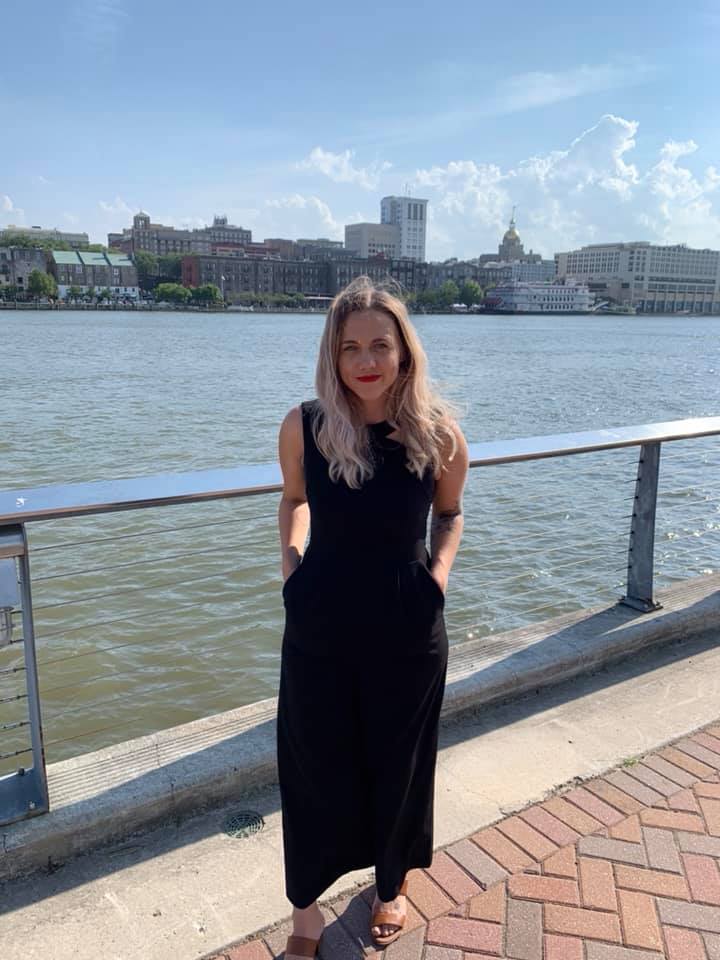
Nicki Klepper (b. 1991) is an artist currently living and working in Savannah, Georgia. Her work broadly focuses on themes about place, loss, and memory. In her most recent body of photographic work, Lazaretto, Nicki explores these themes in relation to the complex history of the southern landscape. Originally from New Jersey, she has spent her time between the Garden State and Montauk, Long Island. She received her BFA in Studio Art from Alfred University in 2013 and her MFA in Photography from the Savannah College of Art and Design in 2019. We spoke with Nicki about her Lazaretto series, why she is drawn to water, and her experience at SCAD.
Where did you grow up?
I grew up in Montvale, New Jersey, but I also think spending summers in Montauk, Long Island have shaped me as a person so I attribute a lot of growing to that place as well.
When were you first exposed to photography?
I was first exposed to photography and art when I was around 8 or 9 years old. My mom had a little Canon SLR that she would take to Montauk with her in the summertime. I remember her taking so many pictures of sunsets over the ocean. I would go with her to CVS to have them developed and hold the little contact sheets in my hands. I was fascinated by them. Eventually, she let me use that Canon too. When I was 12 years old my father’s youngest sibling passed away suddenly. She had been studying at a small liberal arts school in western NY a few years prior and she had a darkroom in my grandparents’ basement. After she passed I felt something missing and I filled that void with photography. Her Pentax K1000 was one of my first cameras and that little liberal arts school in western NY is Alfred University, where I attended undergraduate school.
Who were your early influences?
Rebecca Norris Webb (her book My Dakota inspired my undergraduate thesis work), Alessandra Sanguinetti, Laura Mcphee, Virginia Beahan, Eliot Porter, Sally Mann, and of course… Ansel Adams
How did you grow as an artist while at SCAD?
While in graduate school at SCAD I really began to focus on research, reading and writing about my work. I think that graduate school really molded me into a more developed artist. I have to admit, it is hard to just make a body of work without overthinking it now, but I think it is important to question the work and ask yourself why it is important that you make it. SCAD has a great faculty and I really became close with some of my professors from a variety of backgrounds. They challenged me in ways I never thought possible and this body of work, Lazaretto, is a result of that.
Can you share more about the dark past of Lazaretto Creek and how you learned about it?
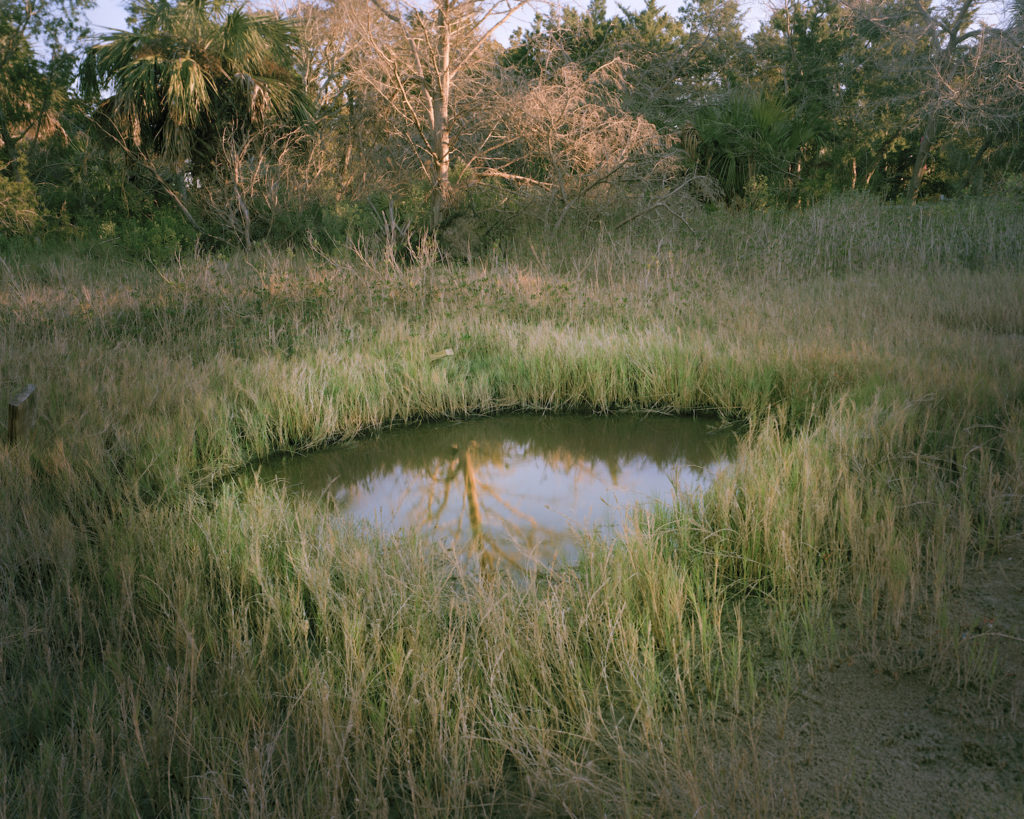
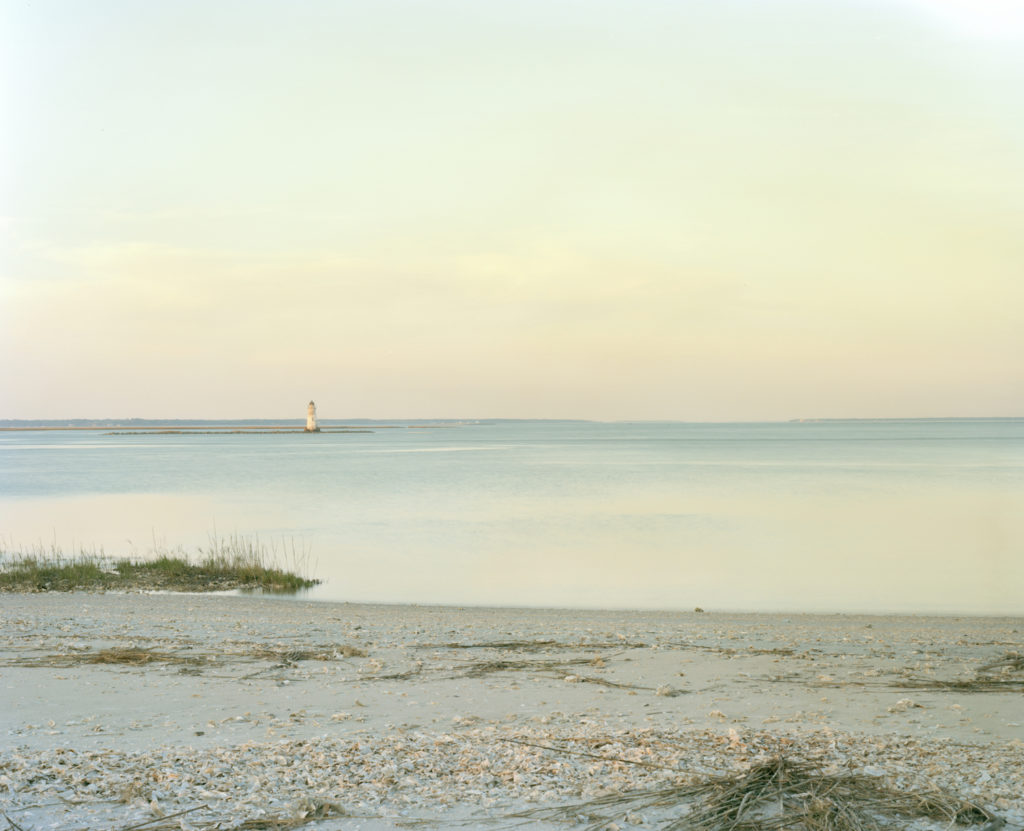
Situated at the western edge of Tybee Island (Savannah’s Beach), Lazaretto Creek and the surrounding area is a place once plagued with affliction, death, and injustice. Once home to a quarantine site for incoming ships arriving at the mouth of the Savannah River with captured slaves from Africa, and thereby, a burial ground for those who did not survive, the Lazaretto series encourages viewers to re-examine their perception of place as it pertains to this specific site, and by extension their own surroundings.
Lazaretto is a historical marker erected by the Georgia Historical Society in the 1950s and I was actually assigned to do a research project about a Georgia Historical Society Marker for an art history course taught by Dr. Holly Goldstein at SCAD. I had frequented that location many times to photograph it, but not until I began the research project did I learn about the location’s dark past. Once I found out, I was hooked and continued to work on the project as my graduate thesis. I took on this project to tell the story of Lazaretto and to shed light on its past.
Discuss your relationship with nature in regards to your work?
Nature and the environment are very important components of my work. I have always been a landscape photographer. I am fascinated by the way in which human beings contour the landscape and in turn, create “place” out of “space”. Nature has always existed, but human beings came long after. I am interested in how the natural world evolves and how it is shaped by society. In regards to Lazaretto, I was interested in the way in which the landscape evolved under societal demands. In our present-day, Lazaretto Creek and the surrounding area is a beautiful place, but at one point in time, it was a place of fear and sorrow. When we see the Tybee Island shoreline now, we think of beaches, restaurants, hotels, and recreation. Back then, it was a tumultuous and frankly, terrifying, experience for many arriving on that shoreline. I love photographing in nature because it is where I am most comfortable with a camera, but this body of work really made me begin to think about nature as a place rather than just the environment.
How do you compose an image?
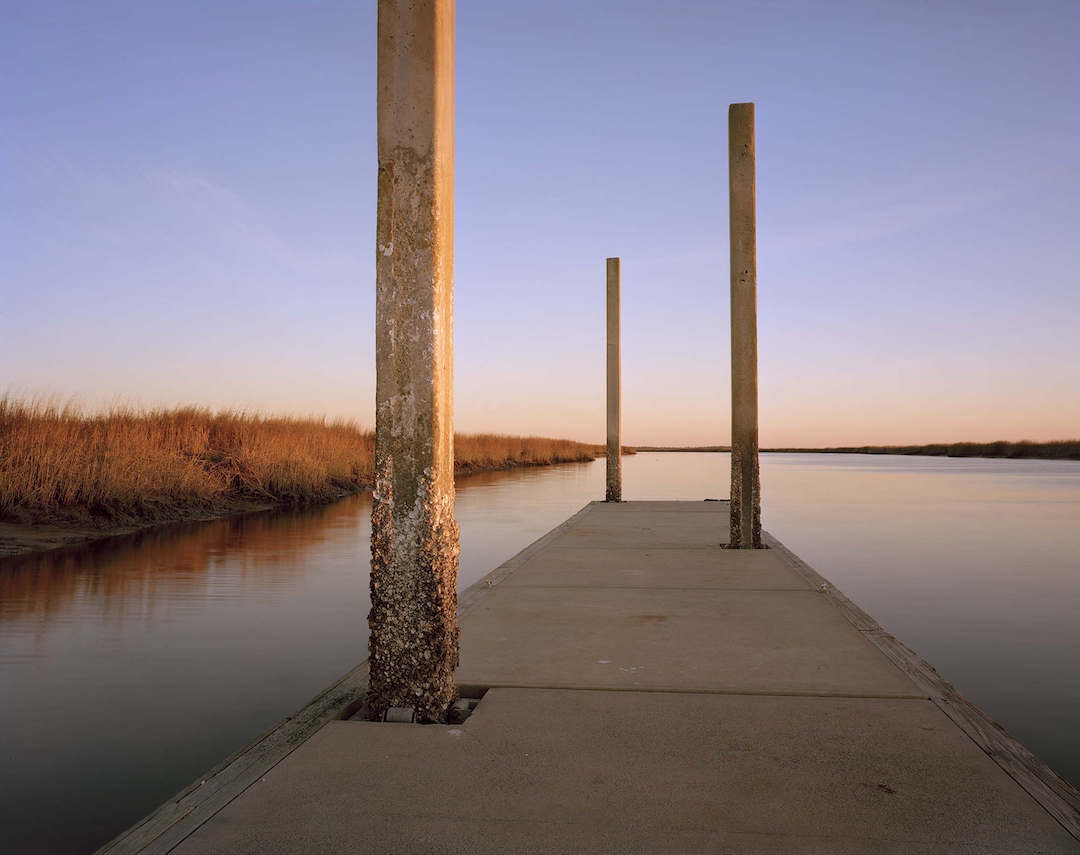
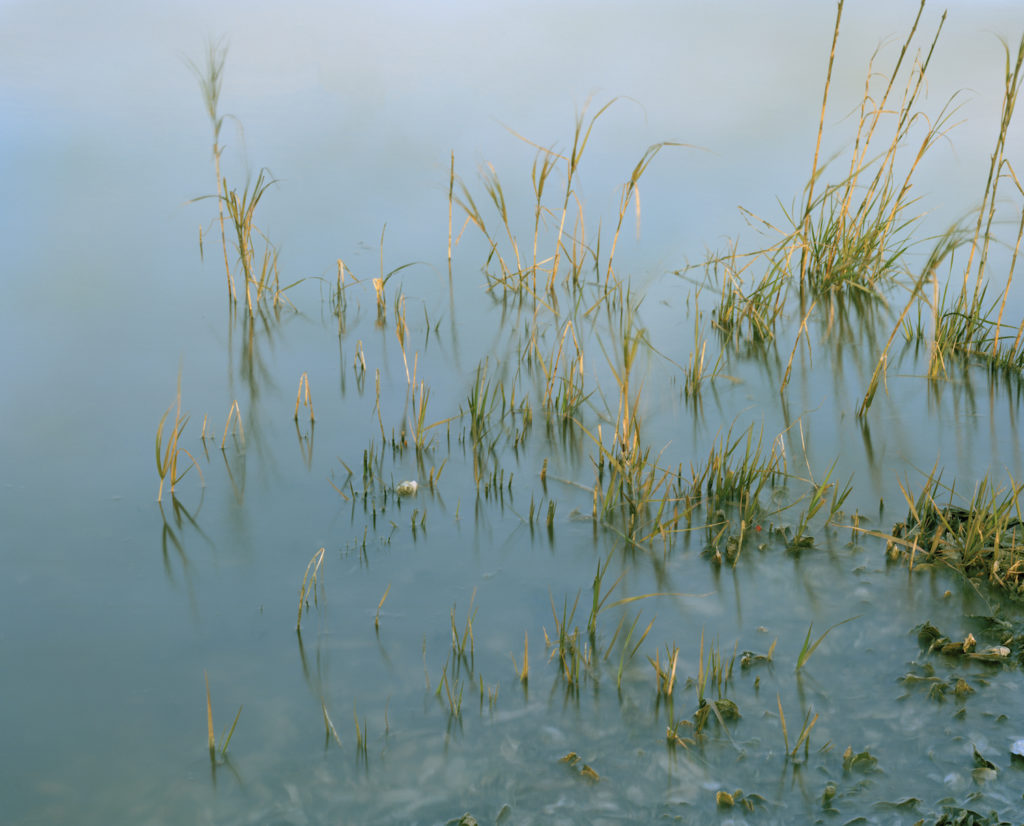
I am always drawn to photographing at golden hour if I have a choice. Once I am in my location, I assess the landscape and begin to contemplate what I need from the space to address my inquiries. I am drawn to water and bodies of water, so often times I compose an image with that subject matter in mind. I like to search for small magical moments in the frame. Light shining on an oyster midden as waves lap onshore; the sunset colors draping over dock pilings. I look for little bits of magic that I think a viewer will be drawn to. As a culture, we are inundated with imagery so when I am composing an image, I think about how I can hold my viewer’s attention for a few moments longer.
What details do you like to capture in your images?
I love water. I love the details of the water, the different forms it makes on film, how the color changes in different light, and how its texture is dependent upon shutter speed. It is by far my favorite thing to photograph. So when I am in the landscape I always try to sneak some water detail in there if possible. I love rain droplets and water movements. The details of the waves and the tide are beautiful to me.
What type of editing software do you use for your photographs?
I made all of this work on film, either with a medium format camera or a 4×5. What I typically do is scan the negatives, bring them into Lightroom to organize, catalog, and do some slight color corrections, and then I bring them into Photoshop to remove dust and make any further adjustments.
Have you ever questioned being an artist as a career path?
Oh yeah absolutely! But at the end of the day making art and making photographs is a part of who I am. I was never very good at math or science. I love reading and writing, but when I am working on a project, I feel alive. I don’t do anything without thinking about it. I think I will always have a day job, but I will never stop making art. I have taken a hiatus here and there, but it is the one thing I always return to.
Why do you think art is important?
It tells us so much. Art will never just be one thing because people are so different and art is made by people. Everyone has a different perspective and I think that art allows artists to share that with that world. I think art is important because stories are important, history is important, and people are important. Art is merely an artist’s way of communicating to their viewers how they see the world, we just have a unique way of telling them.
Featured work at top: Nicki Klepper, Pillars in Memoriam, 2019, Archival Inkjet Print, 16″ x 20″, Ed. 4 of 10
View all of Nicki Klepper’s available work